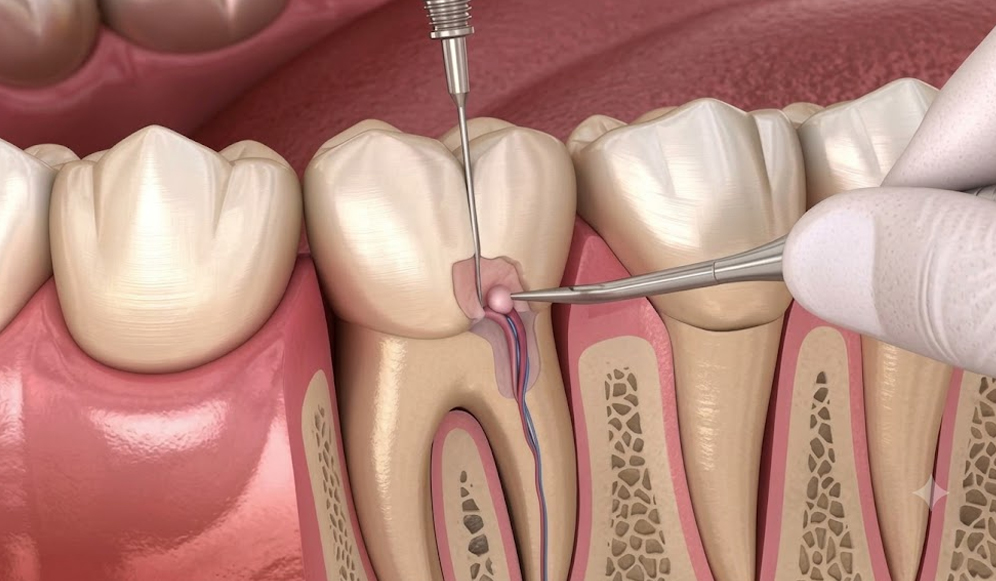
When a deep bacterial infection breaches your tooth’s protective enamel layer and invades the living dental pulp, a root canal treatment (RCT) becomes non-negotiable to save the native structure. Historically, this intervention struck dread into the hearts of patients, conjuring images of endless consecutive appointments, painful temporary dressings, and lingering anxiety.
However, advanced modern endodontic technology has completely transformed this therapeutic landscape. Today, the most pressing question patients ask is no longer “Will it hurt?” but rather, “Can I get this done in a single sitting, and does it last just as long as the traditional multi-visit method?”
For fast-paced corporate professionals, students, and busy parents, single-visit root canals sound like a dream solution. But from a clinical and biological standpoint, which methodology truly delivers the highest long-term success rate?
At Dr. Irfana’s Dental Studio in Jogeshwari West, Mumbai, we believe in grounding clinical efficiency in peer-reviewed science. Led by Dr. Irfana Thanwala, a highly experienced Periodontist (MDS) and Implantologist with an elite Fellowship from the Indian Society of Oral Implantologists (ISOI), we use state-of-the-art diagnostic technologies to carefully evaluate which therapeutic path will guarantee the absolute best long-term outcome for your unique oral anatomy.
Single-Sitting RCT vs. Multi-Visit Root Canals: The Definitive Comparison
To understand how these two treatment paths measure up, let us examine their clinical, technological, and behavioral differences side by side:
| Endodontic Treatment Parameter | Single-Sitting Root Canal Therapy (RCT) | Traditional Multi-Visit Root Canal Therapy |
| Primary Clinical Indication | Vital teeth, acute irreversible pulpitis, or non-infected teeth requiring elective prosthetics. | Teeth presenting with complex periapical abscesses, active pus discharge, or anatomical calcifications. |
| Bacterial Decontamination | Immediate mechanical instrumentation combined with high-intensity chemical irrigation in one session. | Gradual decontamination utilizing prolonged intracanal medicaments (like calcium hydroxide paste) placed between appointments. |
| Risk of Inter-Appointment Re-infection | Zero. The root canal system is cleaned, shaped, and permanently sealed during the exact same session. | Moderate. Temporary fillings can leak, crack, or dislodge between visits, introducing fresh oral bacteria into the canals. |
| Technological Requirements | Highly reliant on modern rotary endodontics, digital apex locators, apex sensors, and dental microscopes. | Standard manual endodontic files and conventional radiography can be utilized (though advanced tools improve outcomes). |
| Patient Convenience Factor | Exceptionally High. Completely eliminates the need for multiple local anesthesia injections and repeated clinical visits. | Low to Moderate. Requires taking multiple days off work, arranging transport, and enduring multiple injection cycles. |
| Statistical Long-Term Success Rate | ~90% to 95% when performed by a skilled specialist on correctly selected, non-necrotic teeth. | ~90% to 95% when proper isolation is maintained and intracanal medication successfully neutralizes deep bacteria. |
The Biological Science: Breaking Down the Success Rates
From a statistical standpoint, extensive meta-analyses in international endodontic journals show that there is no significant difference in the long-term success rates between single-sitting and multi-visit root canals, provided that the case selection is clinically sound. Both methodologies comfortably boast a long-term survival rate exceeding 90% to 95%.
However, the biological mechanism used to achieve that success rate differs vastly between the two approaches:
How Single-Sitting RCT Achieves Longevity
In a single-sitting root canal, the endodontist focuses on entombing any remaining microscopic bacteria. By thoroughly cleaning out the main nerve tissue, irrigating the space with powerful antibacterial fluids, and instantly sealing the canals with a permanent biological filling (Gutta-Percha), any residual bacteria are completely starved of nutrients and oxygen. Without a biological fuel source, they cannot multiply, leading to long-term healing.
How Multi-Visit RCT Achieves Longevity
When a tooth is completely dead (necrotic) and surrounded by a chronic bone infection or cyst, the microbial load inside the root complex is incredibly high. In these specific cases, a multi-visit approach is biologically superior. During the first visit, the canals are cleaned, and a specialized medicinal paste (Calcium Hydroxide) is left inside the tooth for 7 to 14 days. This medication continuously alters the internal pH environment, completely neutralizing aggressive, acid-loving bacteria before the permanent seal is applied on the second visit.
The High-Tech Hardware Behind Mumbai’s Single-Sitting Success
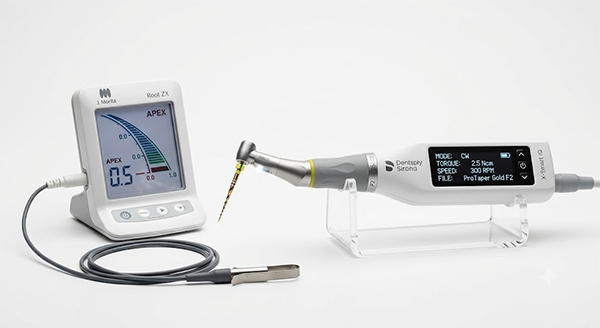
A single-sitting root canal is not simply a regular root canal performed at double speed. It requires advanced specialized hardware that allows the endodontist to achieve absolute biological sterile conditions in under an hour. At Dr. Irfana’s Dental Studio in Jogeshwari West, we achieve these high success rates through a specialized digital workflow:
- CBCT (3D Dental Imaging): Traditional 2D X-rays can miss hidden, curved, or accessory root canals. A 3D scan allows us to map out your tooth’s exact microscopic architecture before we even begin.
- Advanced Rotary Endodontics: Instead of slow manual hand-files, we utilize computerized titanium rotary motors that clean and shape the complex root paths with sub-micron precision, drastically shortening your time in the dental chair.
- Digital Apex Locators: This electronic sensor tracks the exact microscopic tip of your root, ensuring the cleaning fluids and fillings go precisely to the edge of the bone without causing post-operative pain or under-filling.
- Ultrasonic Irrigation Activation: We use ultrasonic sound waves to vibrate the antibacterial fluids inside the tooth. This forces the sanitizing solutions deep into microscopic side canals that traditional dental tools could never physically reach.
FAQs
Does a single-sitting root canal hurt more than a multi-visit one?
No. Thanks to modern local anesthesia protocols, the tooth is completely numbed before the procedure begins. Because the entire treatment is concluded in one session, you only have to go through the injection phase once. You might experience mild, dull muscle tiredness or jaw stiffness the next day simply from keeping your mouth open, which resolves quickly with standard over-the-counter medication.
How do I know if my tooth qualifies for a single-visit root canal?
Generally, teeth with alive but inflamed nerves (acute pulpitis), teeth fractured due to recent physical trauma, or teeth that need root canals for cosmetic/structural smile designing qualify perfectly for single-sitting therapy. If the tooth has chronic swelling, severe pus drainage, or a deep cystic bone lesion, a multi-visit approach is clinically safer.
What happens if a single-sitting root canal is performed on a heavily infected tooth?
If an endodontist attempts to seal a tooth that has active pus discharge or severe acute infection in a single visit, the trapped gases and bacteria can build immense pressure inside the jawbone. This often leads to a painful “flare-up” or acute abscess within 24 to 48 hours post-treatment. Proper clinical assessment is essential to avoid this complication.
Is a single-sitting root canal more expensive than the multi-visit method?
While single-sitting procedures utilize higher-end advanced diagnostic technology and computerized machinery, the overall cost is highly comparable to traditional methods. Furthermore, when you factor in the value of saving your time, skipping multiple commutes, and taking less time off work, single-sitting treatments offer immense long-term lifestyle value.
How can I get my tooth pain evaluated for a single-sitting root canal in Mumbai?
If you are suffering from a sharp toothache or sensitivity and want a precise, technology-driven diagnosis, our clinical team is here to help. To book an advanced digital intraoral diagnostic scan and consult directly with our specialized team, visit Dr. Irfana’s Dental Studio.
Disclaimer
This specialized endodontic and restorative health guide is published strictly for educational and general informational purposes. It does not replace professional clinical intraoral evaluations, advanced 3D dental radiography, or targeted specialist diagnostics. Always schedule an in-person evaluation with a certified endodontic practitioner to safely assess the vitality of your dental pulp, underlying bone structure, and general oral health status.