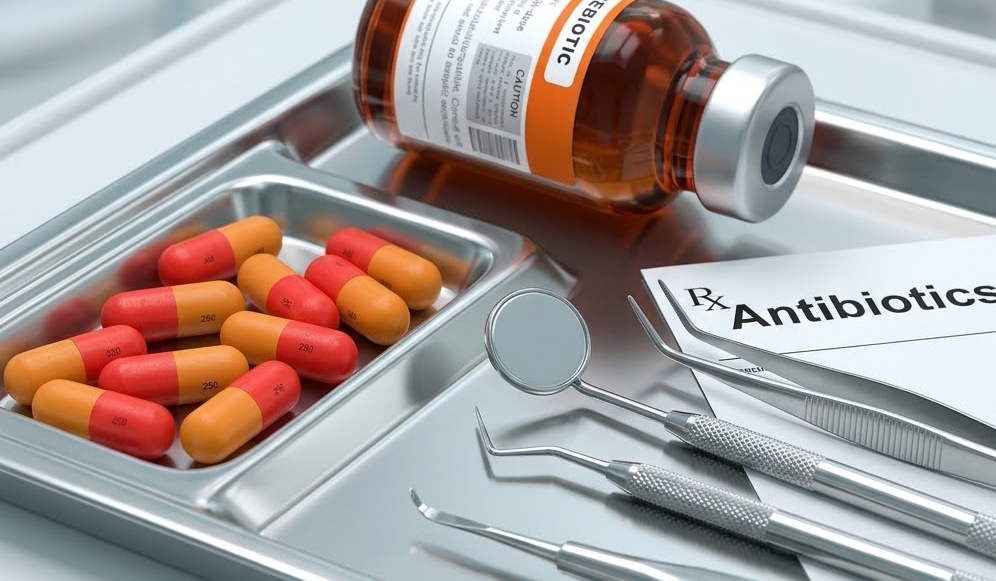
For decades, the standard response to a throbbing toothache, jaw swelling, or a suspected dental abscess was simple and predictable: pick up a prescription for antibiotics. Patients frequently visit pharmacies or call their doctors asking for Amoxicillin or Azithromycin, expecting a course of pills to wash away the underlying dental infection.
However, global healthcare is experiencing a profound paradigm shift. Modern dental guidelines issued by leading institutions—including the American Dental Association (ADA) and the World Health Organization (WHO)—now strongly advise against using antibiotics for most common toothaches.
The clinical reality is stark: antibiotics do not cure a toothache. While they can temporarily suppress bacteria spreading outside the tooth, they cannot penetrate the dead nerve chamber to resolve the source of the infection. Overprescribing these drugs provides a false sense of security while actively contributing to a global health crisis: antimicrobial resistance.
At Dr. Irfana’s Dental Studio in Jogeshwari West, Mumbai, our practice closely follows evidence-based global standards. Led by Dr. Irfana Thanwala, a highly specialized Periodontist (MDS) and Implantologist with an elite Fellowship from the Indian Society of Oral Implantologists (ISOI), we prioritize targeted, definitive treatments over temporary chemical band-aids to safely protect your oral and systemic health.
The ADA Guidelines: Antibiotics vs. Definitive Dental Treatment
To clarify when antibiotics are genuinely required versus when they are clinically unnecessary, look at the official consensus protocols from modern endodontic and dental guidelines:
| Patient’s Presenting Symptoms | Is an Antibiotic Prescribed? | Recommended Modern Clinical Action |
| Sharp sensitivity to hot/cold, localized throbbing pain, or raw decay. | No. Completely unnecessary and ineffective. | Definitive conservative dental care (e.g., a tooth-colored filling or elective overlay). |
| Constant, severe throbbing pain caused by a dead nerve (Necrotic Pulp). | No. Antibiotics cannot reach inside a dead tooth. | Single-Sitting Root Canal Therapy (RCT) to mechanically remove the dead tissue. |
| Localized swelling or a small pimple on the gums (Gumboil/Abscess). | No. Pills cannot drain trapped fluid. | Incision and Drainage (I&D) or immediate root canal access to relieve internal pressure. |
| Severe facial swelling, difficulty swallowing, high fever, or swollen lymph nodes. | Yes. Combined with emergency dental intervention. | Immediate prescription of target antibiotics (e.g., Amoxicillin with Clavulanic Acid) alongside direct surgical drainage. |
| Immuno-compromised states (Uncontrolled diabetes, active cancer therapies). | Yes. Used as a proactive medical safeguard. | Targeted antibiotic coverage coordinated alongside the primary dental procedure. |
The Biological Illusion: Why Pills Cannot Reach a Deep Tooth Infection
To understand why modern guidelines have restricted the use of antibiotics for toothaches, you must look at the unique anatomy of human teeth.
When tooth decay breaks through the enamel and dentin, it enters the central chamber called the dental pulp. The pulp contains the tooth’s blood vessels and nerves. As bacteria multiply, the intense inflammation cuts off the tooth’s blood supply. The pulp dies, creating a necrotic space.
[Deep Cavity Infiltration] ➔ [Inflamed Pulp] ➔ [Blood Vessels Collapse/Pulp Dies] ➔ [Zero Blood Flow Inside Tooth] ➔ [Antibiotics Blocked Outside]
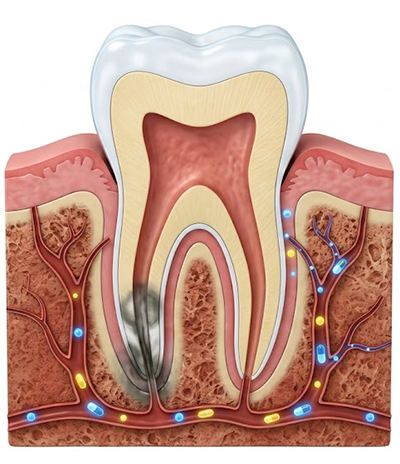
This structural shutdown creates a major biological obstacle. For an antibiotic to destroy bacteria, it must travel through your bloodstream to reach the site of infection. Because a necrotic tooth has zero blood circulation inside it, any antibiotic pills you swallow circulate through your body but cannot physically get inside the tooth to kill the bacteria hiding there.
The bacterial colony remains safely shielded within the hard enamel walls, continuing to leak toxins out of the root tip into your jawbone. The only way to resolve this is mechanical removal—either by thoroughly cleaning the canals during a root canal or by extracting the non-salvageable tooth.
The Real Dangers of Self-Medicating with Dental Antibiotics
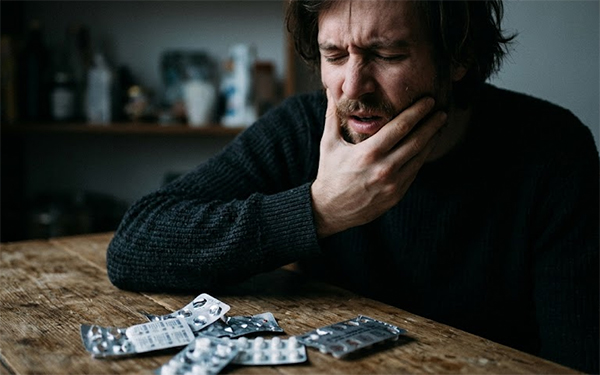
Relying on leftover antibiotics or buying them over-the-counter without a dentist’s evaluation carries significant risks:
- The Illusion of a Cure: Antibiotics can kill bacteria that have leaked outside the bone, temporarily reducing your pain. This tricks you into thinking the infection is gone. Meanwhile, the core infection inside the root continues silently eroding your jawbone.
- Aggressive Re-infection: Once you stop taking the pills, the bacteria safely tucked away inside the tooth multiply again, often returning as a much more aggressive, painful abscess.
- Antimicrobial Resistance (AMR): Using antibiotics unnecessarily trains bacteria in your body to survive the medication. If you develop a severe, life-threatening infection down the road, standard antibiotics may no longer work for you.
- Gastrointestinal Distress: Broad-spectrum antibiotics destroy the healthy, beneficial bacteria in your gut, frequently leading to stomach cramps, severe diarrhea, and compromised natural immunity.
Evidence-Based Emergency Protocols at Dr. Irfana’s Dental Studio
At our state-of-the-art facility in Jogeshwari West, we strictly follow international protocols to manage pain safely and effectively without relying heavily on prescriptions:
- Immediate Micro-Endodontic Access: If you arrive with a severe, throbbing toothache, we do not send you home with a handful of pills. We open the tooth under precise local anesthesia to instantly relieve internal pressure and remove the raw infection.
- Clinical Incision and Drainage (I&D): For localized swelling, our surgical team performs gentle drainage to clear away built-up pressure and bacteria immediately, providing fast pain relief.
- Advanced Digital CBCT Screening: We use 3D jaw imaging to map the precise boundaries of bone infections, ensuring we target the source of your pain accurately without unnecessary medication.
- Targeted Non-Antibiotic Pain Management: We prescribe specific combinations of anti-inflammatory medications that target dental nerve pain directly, keeping you comfortable while your tissues heal naturally.
FAQs
Why did my dentist refuse to give me antibiotics for my severe toothache?
Your dentist is following the latest global medical guidelines. If your toothache is caused by an inflamed or dead nerve, antibiotics cannot get inside the tooth to fix it. The only safe, reliable way to stop the pain is a direct dental treatment like a root canal or a filling.
When is an antibiotic absolutely necessary for a dental issue?
Antibiotics are crucial if the infection spreads past the jawbone into your surrounding facial tissues. Signs of this include noticeable facial swelling, a high fever, swollen lymph nodes under your jaw, or difficulty swallowing and breathing.
Can I stop taking my prescribed dental antibiotics early if the pain stops?
No. If your dentist explicitly prescribes antibiotics for a spreading infection, you must complete the entire course exactly as directed. Stopping early allows the strongest, most resilient bacteria to survive, mutant, and return as a much tougher infection.
What is the safest painkiller to take while waiting for my dental appointment?
Over-the-counter non-steroidal anti-inflammatory drugs (NSAIDs) like Ibuprofen are typically the most effective for dental pain because they reduce tissue swelling around the tooth’s root. Always consult a healthcare professional before taking medication, especially if you have existing health conditions.
How can I get my toothache safely evaluated by an expert team in Mumbai?
Living with a chronic toothache or taking unprescribed pills places your health at unnecessary risk. To receive an advanced digital diagnosis and explore safe, definitive care from our clinical team, visit Dr. Irfana’s Dental Studio.
Disclaimer
This specialized guide on endodontic guidelines and pharmacology is published strictly for educational and general informational purposes. It does not replace professional clinical examinations, emergency dental interventions, or personalized intraoral radiography. Always schedule an immediate in-person consultation with a certified practitioner to safely diagnose oral infections and establish a verified treatment strategy.