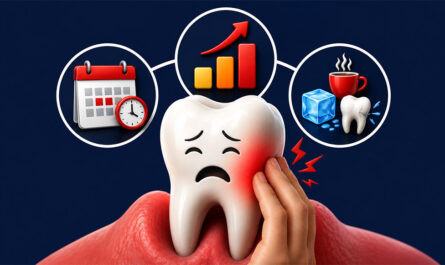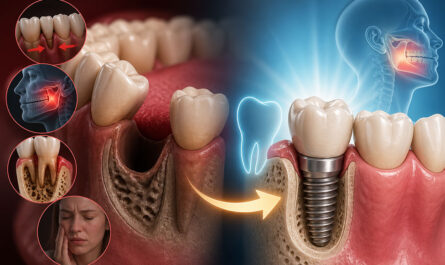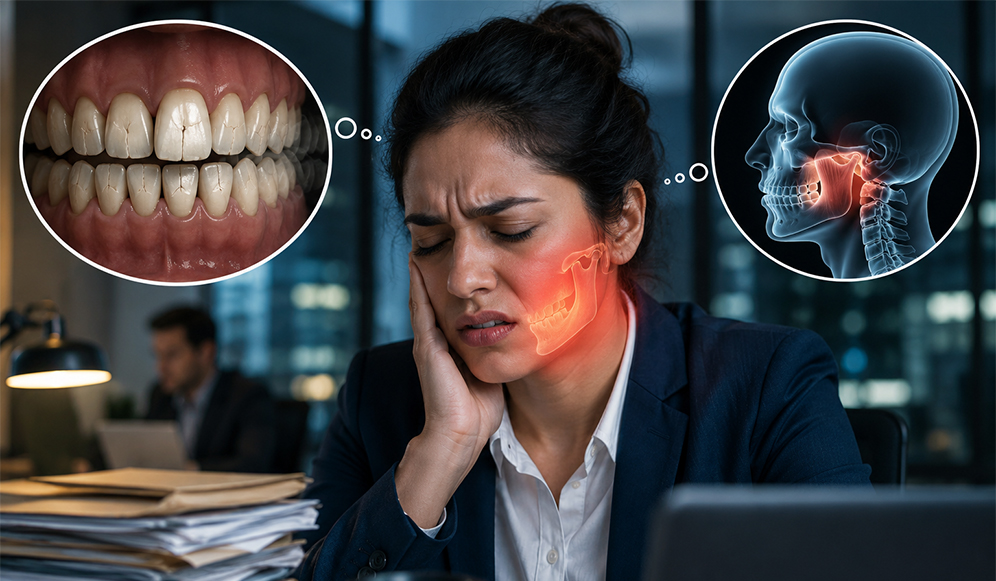
Navigating a demanding corporate career in Mumbai often means balancing back-to-back meetings, tight project deadlines, and long hours stuck in traffic. While you might manage this professional anxiety with caffeine, workout routines, or weekend getaways, your body could be handling the pressure in a far more destructive, silent way while you sleep.
If you frequently wake up with a dull, mysterious headache, unexplained stiffness along your jawline, or a chipped tooth that seemingly happened out of nowhere, you are likely experiencing bruxism (nocturnal teeth grinding).
In hyper-competitive professional hubs like Mumbai, chronic work anxiety is directly contributing to an alarming rise in structural dental damage. This comprehensive medical guide explores how corporate stress triggers involuntary grinding, the long-term dangers to your teeth and jaws, and how targeted clinical care at Dr. Irfana’s Dental Studio in Jogeshwari West, Mumbai can safeguard your smile.
At a Glance: Stress-Induced Bruxism vs. Normal Dental Wear
| Symptom Category | Mild Everyday Dental Wear | Stress-Induced Nocturnal Bruxism |
| Morning Sensation | Mouth feels normal and rested. | Dull headache, tense facial muscles, or jaw fatigue. |
| Tooth Surface Changes | Minor smoothing of biting edges over decades. | Flat teeth, sharp edges, or micro-cracks appearing rapidly. |
| Jaw Joint Impact | Smooth, silent jaw movement. | Clicking, popping sounds, or pain near the ears (TMJ issues). |
| Rest Quality | Restful sleep cycles. | Waking up tired; partners reporting loud grinding noises. |
The Corporate Connection: How Stress Triggers Teeth Grinding
Bruxism is a neuromuscular condition where you involuntarily clench, gnash, or grind your teeth. While daytime clenching can happen consciously when you are deeply focused on a spreadsheet or driving through heavy traffic, nighttime (nocturnal) bruxism occurs entirely unconsciously.
The Adrenaline Surge
When you experience ongoing corporate stress, your central nervous system remains in a constant state of “fight-or-flight.” This metabolic state floods your system with stress hormones like cortisol and adrenaline. Even after you fall asleep, your brain continues to misfire commands to your masticatory (chewing) muscles.
Instead of relaxing during deep sleep cycles, your powerful masseter muscle contracts violently. This forces your upper and lower teeth to scrape against each other with immense structural force-often up to six times greater than the pressure used during normal chewing.
The Long-Term Destruction: Why Your Enamel Cannot Take the Pressure
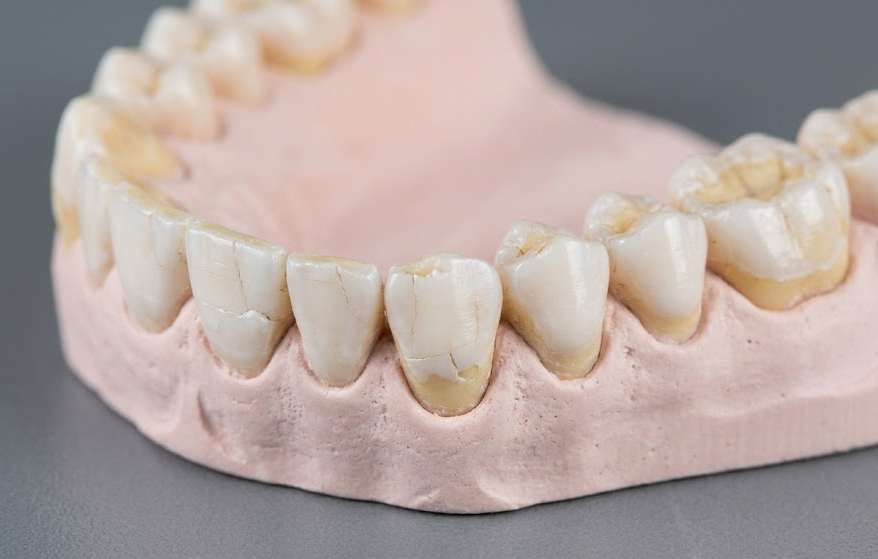
Your tooth enamel is the hardest biological substance in the human body, but it is not designed to withstand hours of continuous, unlubricated friction night after night. Leaving stress-induced grinding untreated leads to severe dental degradation:
- Micro-Cracks and Fractures: Over time, the heavy pressure causes microscopic fracture lines to develop across your enamel. Eventually, a piece of a healthy tooth can break off completely while eating soft food.
- Loss of Vertical Tooth Height: Chronic grinding wears down the natural ridges and cusps of your teeth. Your teeth gradually flatten out, which shortens your bite height, alters your facial appearance, and makes you look prematurely aged.
- Severe Nerve Exposure: As the protective white enamel layer erodes, the underlying yellow dentin layer is exposed. This leads to intense, chronic sensitivity to cold water, hot cutting chai, and sweet treats.
- Abfraction Lesions: The intense flexing of the teeth during clenching causes the enamel to flake away near the gumline, creating deep notches that look like notches carved by a toothbrush but are actually caused by stress force.
TMJ Disorder: When Tooth Grinding Turns Into Jaw Dysfunction
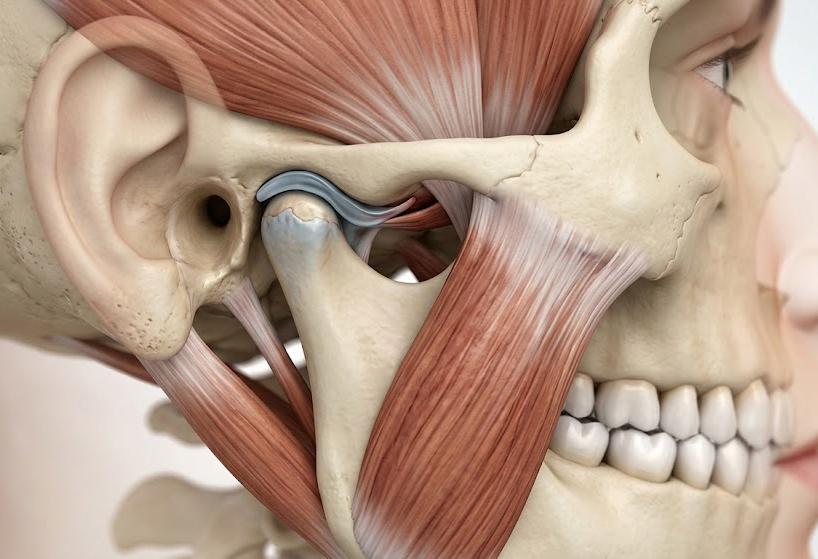
The destructive forces of bruxism do not stop at your teeth. Your lower jaw connects to your skull via two complex joints located right in front of your ears, known as the Temporomandibular Joints (TMJ).
When your jaw muscles spend the entire night clenching under stress, the continuous pressure forces the delicate cartilage disc inside the TMJ out of its proper position. This results in Temporomandibular Joint Disorder (TMD), a painful condition characterized by:
- A distinct clicking, popping, or grating sound whenever you open your mouth wide to speak or eat.
- Sudden locking of the jaw joint, making it difficult to fully open or close your mouth.
- Referred pain that feels like a deep earache or a chronic migraine, leading many professionals to seek help from physicians when the root cause is actually in their mouth.
Targeted Clinical Solutions: How Your Dentist Protects Your Smile
Managing bruxism requires a dual approach that addresses both the physical symptoms and the underlying muscular tension. Standard home care cannot fix worn enamel or realign a displaced jaw disc.
Custom-Molded Night Guards (Occlusal Splints)
The primary line of clinical defense is a custom-made night guard. Unlike bulky, soft sports mouthguards bought at local stores, a professional night guard is fabricated using precise digital impressions. Made of durable, medical-grade hard acrylic, it fits snugly over your upper or lower teeth. It acts as a smooth barrier that absorbs the destructive grinding forces, allowing your jaw muscles to relax and protecting your permanent enamel from wearing away.
Bite Realignment and Restorative Therapy
If chronic grinding has already flattened or fractured your teeth, your dentist can use high-strength composite dental bonding or premium ceramic crowns to restore lost tooth height and rebalance your bite distribution.
Reclaim Your Comfort at Dr. Irfana’s Dental Studio
You do not have to let professional anxiety compromise your smile or leave you in chronic pain. At Dr. Irfana’s Dental Studio, situated in the heart of Jogeshwari West, Mumbai, we specialize in diagnosing and treating stress-induced bruxism and complex jaw joint disorders.
Our modern clinic uses advanced diagnostic scanning tools to evaluate your exact bite pattern and pinpoint early signs of enamel micro-fractures before major breakages occur. Dr. Irfana creates highly precise, custom acrylic splints and protective guards designed to seamlessly fit into a busy corporate lifestyle. If grinding has already damaged your smile, our restorative team provides cosmetic bonding, aesthetic dental crowns, and gentle therapies to relieve your jaw joint pain.
Conveniently located for working professionals across Western Mumbai, our tranquil, hygienic studio environment ensures a comfortable treatment experience. Schedule a comprehensive diagnostic jaw evaluation with us today to sleep pain-free and secure your long-term oral health.
FAQs
Can I just use an over-the-counter boil-and-bite sports mouthguard for teeth grinding?
No, using a soft sports mouthguard for nocturnal bruxism can actually worsen the problem. Because the material is soft and spongy, your brain treats it like a piece of chewing gum, which stimulates your jaw muscles to clench and chew even harder during the night. Additionally, cheap store-bought guards are bulky and do not distribute biting forces evenly, which can permanently misalign your bite over time.
Does teeth grinding stop on its own if my work stress decreases?
While a temporary reduction in stress can lower the intensity of your grinding, bruxism often develops into a long-term, subconscious muscle habit over time. Even during less stressful weeks, your jaw muscles may continue to clench out of habit. It is crucial to use a protective night guard to safeguard your enamel while you work on managing your everyday stress.
Why do I wake up with a dull headache every morning if my teeth don’t hurt?
When you grind your teeth at night, you are continuously overworking the temporalis and masseter muscles, which run along the sides of your face, jaw, and up into your temples. Hours of constant muscle contraction lead to severe muscle fatigue and localized spasms, which present as a dull, radiating tension headache upon waking up.
How long does a custom night guard last, and is it uncomfortable to sleep with?
A high-quality, clinically fabricated night guard made from medical-grade acrylic can last anywhere from 2 to 5 years, depending on the severity of your grinding habit. Because it is custom-molded to the exact millimeter of your dental arch, it feels thin and comfortable. Most patients adapt completely to wearing it within just 3 to 5 nights.
What happens if I choose to ignore my jaw clicking and grinding symptoms?
Ignoring advanced bruxism can lead to severe structural complications. Over time, you run the risk of breaking multiple teeth down to the nerve line, requiring extensive root canal treatments or extractions. Additionally, chronic TMJ strain can result in your jaw locking permanently, severe arthritis in the jaw joints, and persistent facial pain that disrupts your daily corporate routine.