Choosing a permanent dental treatment to replace missing teeth is a significant health decision. Unlike temporary dental bridges or removable partial dentures, permanent dental implants are widely celebrated as the closest replication of your natural teeth. However, because getting implants involves a precise surgical procedure and a notable financial commitment, one of the most common questions patients ask is whether these custom structures will truly last for the rest of their lives.
The straightforward answer is that while dental implants are designed to be a permanent solution, their absolute longevity depends heavily on structural planning, lifestyle habits, and continuous maintenance. Modern clinical studies show that high quality implants boast a long term success rate of over ninety five percent. Understanding the biological and clinical factors that contribute to this success can help you protect your investment and maintain a healthy smile for decades.
The Biological Foundation of Lifetime Implant Success
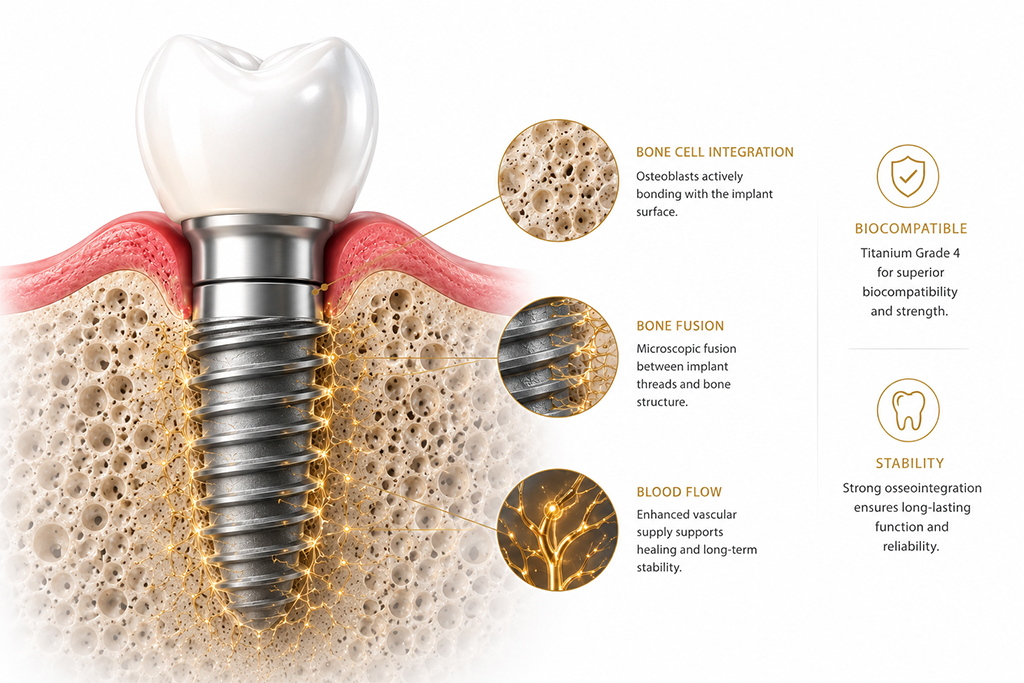
To understand why dental implants can last so long, it helps to examine how they integrate with the human body. Unlike traditional dental caps that rely on neighboring teeth for physical support, an implant interacts directly with your skeletal structure.
The Process of Osseointegration
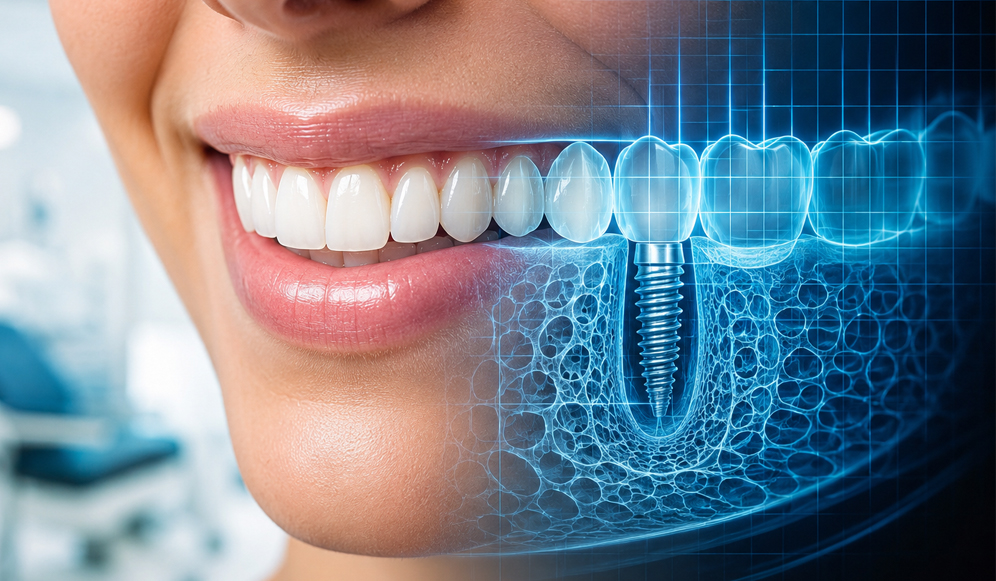
The secret to the longevity of a dental implant lies in a natural biological process known as osseointegration. Dental implants are constructed from medical grade, biocompatible titanium or premium zirconia. When a dental surgeon places this titanium post into your jawbone, your body does not reject it. Instead, over a period of a few months, your natural bone tissue actively grows around the implant post, anchoring it securely. Once this fusion is complete, the titanium post effectively replaces the natural root of your tooth.
Protection Against Structural Bone Loss
When you lose a natural tooth, the surrounding jawbone loses the daily mechanical stimulation it needs to stay healthy and dense. This lack of stimulation causes the bone to shrink over time. Because a dental implant fuses directly into the jaw, it continuously transmits chewing forces deep into the bone tissue. This mechanical feedback mimics roots of natural tooth, preserving your jawbone density and maintaining a stable facial framework as you age.
Understanding and Preventing Implant Failure
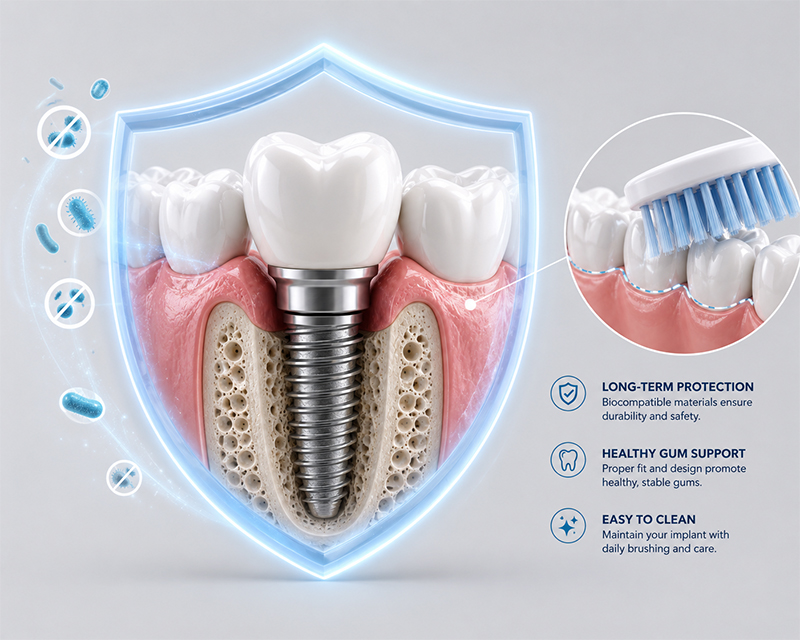
While the titanium post itself cannot develop structural decay or cavities, the surrounding living tissues that hold the implant in place remain vulnerable to infection. Recognizing the signs of early complications is vital for long term survival.
The Threat of Peri Implant Mucositis and Peri Implantitis
The primary cause of long term dental implant failure is poor oral hygiene, which leads to bacterial plaque buildup around the gumline. The initial stage of gum inflammation around a titanium post is called peri implant mucositis. If left untreated by a dental professional, this inflammation can progress into a severe condition known as peri implantitis. This progressive bacterial infection destroys the soft gums and eventually eats away at the supportive jawbone holding the implant, causing the entire structure to loosen.
Mechanical Overload and Bruxism
Another uncommon factor that can threaten your implant lifespan is mechanical overload. If your bite alignment is uneven, or if you suffer from severe nighttime teeth grinding and clenching known as bruxism, the continuous excessive force can place immense stress on the prosthetic crown or the underlying bone connection. Utilizing protective custom nightguards is an effective way to shield your ceramic crowns from premature fracturing.
At a Glance Traditional Tooth Replacements vs Lifetime Dental Implants
| Restorative Feature | Standard Removable Dentures | Fixed Dental Bridges | Lifetime Dental Implants |
| Average Clinical Lifespan | Requires total replacement or reshaping every five to seven years | Typically lasts between seven to ten years before replacement | Can comfortably last for a lifetime with proper maintenance |
| Susceptibility to Tooth Decay | Not applicable but can trap harmful bacteria against surrounding teeth | High risk of decay developing underneath the supporting natural caps | Zero risk of cavities or decay inside the titanium framework |
| Impact on Jawbone Health | Speeds up progressive bone loss due to constant surface rubbing | Does not stop internal bone resorption where the tooth is missing | Actively preserves and stimulates natural jawbone density |
| Adjacent Tooth Preparation | Uses metal clasps that can gradually loosen neighboring teeth | Requires permanently grinding down and damaging healthy adjacent teeth | Stands completely independent without altering nearby teeth |
Practical Checklist to Ensure Your Dental Implants Last a Lifetime
Maximizing the longevity of your modern smile restoration requires a partnership between your daily home care routines and professional clinical maintenance.
- Commit to Thorough Daily Hygiene: Brush your teeth at least twice a day with a soft-bristled toothbrush and clean around the implant using specialized implant-safe floss or an electronic water flosser to remove hidden plaque.
- Schedule Regular Professional Cleanings: Visit your clinical care team every six months for routine diagnostic checkups and professional scaling to remove hardened tartar from hard-to-reach areas.
- Avoid Hard Habits: Refrain from chewing on ice, hard candies, or opening packages with your teeth, as extreme force can chip the custom porcelain or zirconia crowns.
- Stop Tobacco Use: Smoking significantly slows down the natural healing process and restricts vital blood flow to the gums, doubling the risk of early implant complications.
Why Choose Dr. Irfana’s Dental Studio to Secure Your Long Term Dental Health
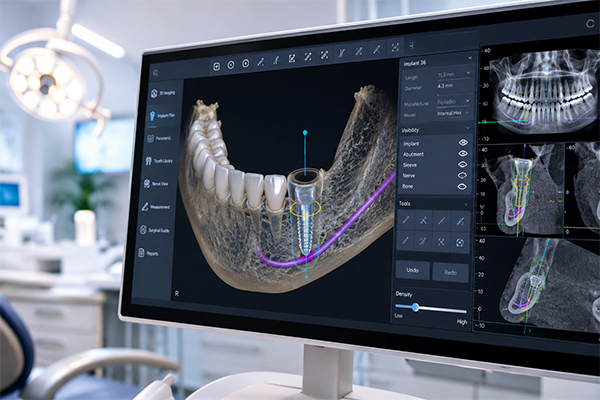
Conveniently accessible to residents and international travelers across major western Mumbai neighborhoods like Andheri West, Oshiwara, and Jogeshwari, Dr. Irfana’s Dental Studio focuses on delivering highly precise, predictable, and exceptionally durable dental implant solutions. We believe that a successful implant is designed to provide lifetime comfort and functionality.
Our modern facility combines advanced cone beam computed tomography 3D scanning with computer guided virtual treatment planning to ensure every titanium post is positioned with mathematical accuracy into your optimal bone structure. By working with top tier laboratories and utilizing premium, globally certified materials like biocompatible titanium, high strength translucent zirconia, and conservative Emax ceramics, our dedicated team ensures your structural health is completely protected for a confident, worry free smile.
FAQs
Can a dental implant develop a cavity or tooth decay over time
A dental implant is constructed entirely from medical grade titanium and premium ceramic or zirconia crowns, meaning it is biologically impossible for the implant to develop a cavity or decay. However, the living gums and bone holding the implant can still suffer from bacterial infections if plaque is not cleaned away daily.
What does it feel like if a dental implant is beginning to fail
An early warning sign of potential implant complications includes bleeding, swelling, or redness in the surrounding gum tissue. If the condition advances to late-stage bone loss, you may notice a slight movement or looseness in the implant structure, or experience discomfort while chewing, which requires an immediate dental checkup.
Is it possible to replace a dental implant if it fails after several years
Yes, if an implant fails due to a gum infection or mechanical trauma, a skilled dental surgeon can carefully remove the loose post, thoroughly clean the area to eliminate bacteria, and perform a specialized bone graft. Once the area has completely healed and the bone density is restored, a new implant can be safely replaced.
Does age affect the long term success rate of dental implants
Age itself is not a limiting factor for dental implant success. Whether you are a young adult or a senior citizen, implants will fuse predictably as long as your jawbone has finished growing and you possess good overall health with controlled blood sugar levels.
Are there any medical conditions that might prevent an implant from lasting a lifetime
Certain systemic health issues like uncontrolled diabetes, active cancer treatments, severe osteoporosis, or autoimmune disorders can slow down the bone healing process and increase the risk of complications. However, if your medical conditions are properly managed and monitored alongside your clinical team, implants remain a safe and highly reliable solution.
Disclaimer: This article is for informational purposes only; please consult a dental professional for personalized medical advice.