Completing a root canal treatment (RCT) is a major milestone in saving an infected or badly damaged tooth. By removing the diseased nerve tissue and sealing the inner canals, your dentist effectively eliminates pain. However, a tooth that has undergone an RCT becomes structurally brittle over time because it no longer receives an internal blood supply. Without a protective restoration, the tooth is highly susceptible to fracturing under everyday chewing forces.
For decades, the standard protocol was to aggressively grind down the remaining healthy tooth structure to fit a full dental crown (cap). Today, modern Conservative and Biomimetic Dentistry has revolutionized this approach. Instead of full crowns, advanced materials like E.max lithium disilicate allow dentists to use conservative restorations like Inlays, Onlays, Vonlays, and Table Tops. These options preserve your natural enamel while providing exceptional strength.
This comprehensive guide compares traditional Metal-Ceramic and Zirconia crowns with modern E.max conservative options to help you choose the best restoration path at Dr. Irfana’s Dental Studio in Jogeshwari West, Mumbai.
At a Glance: Conservative E.max Options vs. Traditional Full Crowns
| Restoration Type | Modern E.max Conservative Options (Inlay/Onlay/Table Top) | Full Zirconia Crowns | Traditional Metal-Ceramic (PFM) Crowns |
| Tooth Preservation | High. Saves up to 50–70% more natural tooth structure. | Low. Requires trimming all sides of the tooth. | Low. Requires aggressive tooth reduction. |
| Material Base | Glass-ceramic (Lithium Disilicate). | Crystalline Ceramic (Zirconium Dioxide). | Porcelain fused to a base metal alloy core. |
| Aesthetic Quality | Exceptional. Matches natural enamel translucency perfectly. | Very high, but can look dense if monolithic. | Moderate; can look artificially chalky or opaque. |
| The “Gray Line” Risk | None. 100% metal-free. | None. 100% metal-free. | High risk. Metal edge shows if gums recede. |
| Bonding Strength | Chemically fused/bonded directly to the tooth enamel. | Mechanically cemented over the prepared tooth. | Mechanically cemented over the prepared tooth. |
Modern Conservative Restorations: What are Inlays, Onlays, Vonlays, and Table Tops?
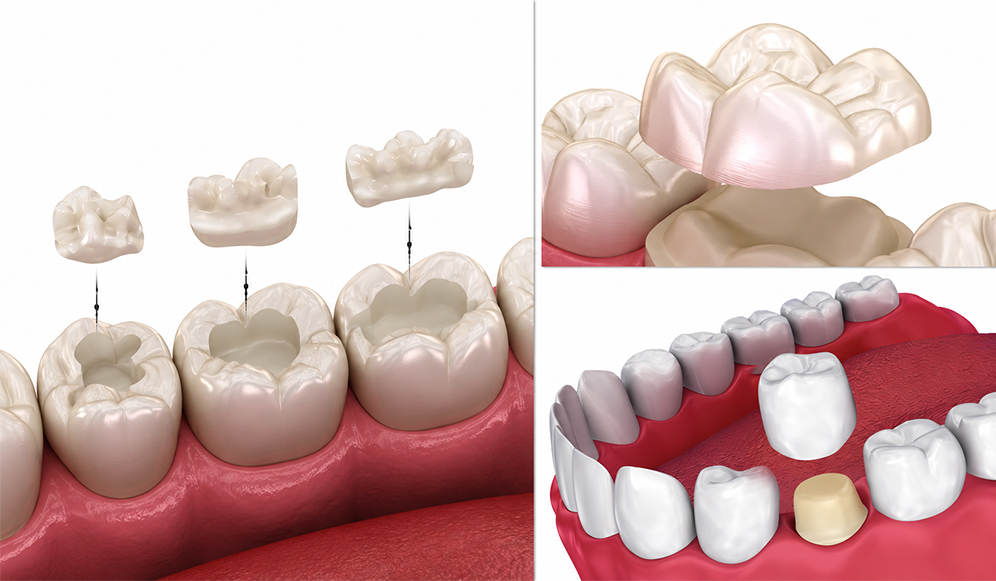
When a tooth is structurally damaged, full crowns require drilling away healthy enamel just to create a support wall for the cap. E.max conservative restorations act like puzzle pieces that fit precisely into or over only the damaged parts of the tooth.
1. E.max Inlays & Onlays
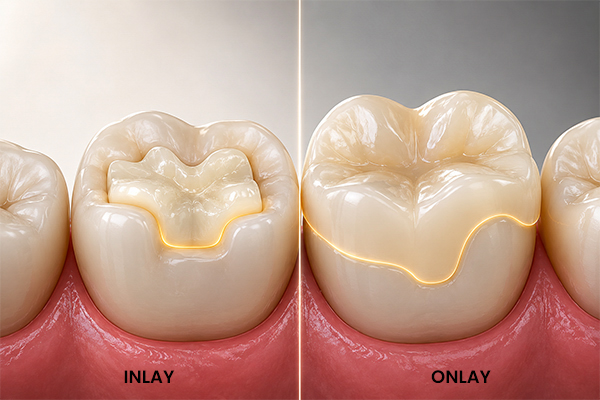
- Inlays: Custom ceramic fillings that fit inside the grooves of your tooth without covering the cusps (pointed tips).
- Onlays: Often called “partial crowns,” these cover one or more damaged cusps. If the root canal access cavity is wide but the side walls are healthy, an E.max onlay shields the chewing surface without touching the rest of the tooth.
2. E.max Vonlays & Table Tops
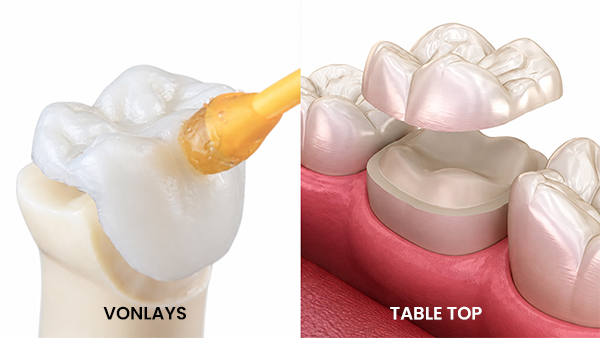
- Vonlays: A creative hybrid of a veneer and an onlay. It restores the chewing surface of a back tooth while extending down the front surface to mask structural discoloration beautifully.
- Table Tops (Occlusal Veneers): Ultra-thin ceramic overlays bonded directly to the entire chewing surface. They restore lost vertical bite height and add structural strength with minimal preparation.
Why E.max is Perfect for Conservative Work:
E.max (lithium disilicate glass-ceramic) offers a unique combination of translucent aesthetics and high flexural strength. Because it can be etched and chemically bonded directly to human enamel, it becomes an integral part of the tooth structure, reinforcing it against heavy chewing forces.
The Traditional Options: Full Zirconia and Metal-Ceramic (PFM) Crowns
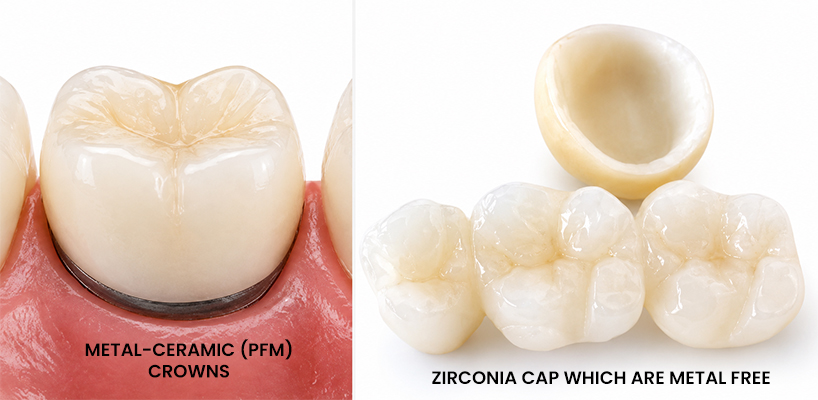
When a tooth is completely broken down or has extensive structural fractures, a full crown is still needed.
- Metal-Ceramic (PFM) Crowns
These traditional caps use an inner dark metal alloy core covered by an outer layer of tooth-colored dental porcelain. While strong and cost-effective, they require aggressive tooth reduction. Over time, as gums recede, they often reveal an unsightly dark gray or black line along the gum border.
- Full Zirconia Crowns
Milled from a solid block of zirconium dioxide, zirconia crowns are virtually indestructible. They are excellent for heavy-duty grinding areas in the back of the mouth, especially for patients with a habit of clenching their teeth (bruxism). However, they lack the lifelike translucency of E.max and still require full structural trimming of the natural tooth walls.
Biomechanical Choice: Which Option Belongs in Your Mouth?
Choosing the right option depends on how much healthy tooth structure remains after your root canal treatment.
- Choose E.max Inlays/Onlays/Table Tops if: More than 50% of your natural tooth walls are intact. It is always better to save your natural enamel rather than drill it away for a crown.
- Choose Full Zirconia Crowns if: The tooth is extensively broken down down to the gum line, or you are a heavy night grinder who needs absolute material durability.
- Choose Metal-Ceramic (PFM) Crowns if: You need a reliable, budget-friendly traditional restoration for a back molar where aesthetics are not a priority.
Premium Conservative Care at Dr. Irfana’s Dental Studio
At Dr. Irfana’s Dental Studio in Jogeshwari West, Mumbai, our clinical philosophy focuses on minimally invasive dentistry. We prioritize saving your natural tooth structure using advanced biomimetic techniques rather than rushing into aggressive full-crown preparations.
Our clinic utilizes precision digital planning and works with elite dental laboratories to design custom E.max onlays, table tops, and premium crowns. Dr. Irfana evaluates the structural integrity of your tooth after an RCT to recommend the most conservative option that ensures long-term comfort, realistic aesthetics, and maximum tooth longevity.
Schedule an appointment at our Jogeshwari West facility today to evaluate your restorative options and discover the benefits of modern conservative dental care.
FAQs
Why is a conservative onlay or table top better than a full crown?
A full crown requires removing a significant amount of healthy natural tooth structure to create a parallel stump. A conservative E.max onlay or table top preserves your natural enamel walls and cusps. Saving your natural enamel leaves the tooth structurally stronger and more resilient to fractures over your lifetime.
Are thin E.max table tops strong enough to handle heavy chewing loads?
Yes. While E.max glass-ceramic looks delicate and thin, its strength multiplies significantly once it is chemically bonded to your natural enamel. The modern bonding resins fuse the porcelain and enamel into a single cohesive unit, allowing it to distribute chewing forces effectively.
Will an E.max inlay or onlay stain or change color over time?
No. E.max lithium disilicate is non-porous and highly glazed. It is exceptionally resistant to staining from coffee, cutting chai, tobacco, or dark food pigments like turmeric. Regular oral hygiene practices will keep your restoration looking flawless for years.
How long do E.max conservative restorations last compared to regular crowns?
When maintained with excellent home oral care and routine professional cleanings, E.max onlays and table tops can easily last 10 to 15 years or longer. Because they preserve natural tooth structures, they often have better long-term survival rates for the tooth itself compared to aggressive full crowns.
Is the preparation procedure for a table top painful?
Not at all. In fact, because table tops and onlays are highly conservative, they require minimal tooth reduction. The procedure is extremely comfortable, completely safe, and preserves the structural integrity of your smile with ease.
Disclaimer: This dental article is for informational and educational purposes only and does not substitute for professional medical or dental advice, diagnosis, or treatment. Make sure to double-check the physical labels, care guidelines, and material authenticity cards (like genuine E.max identity certificates) provided by your clinical care studio to ensure accurate guidance.